
How Can Group Art Discussions Reduce Stress and Loneliness?

In the previous article, we explored how simply looking at art can help reduce stress. But something interesting happens when we begin discussing art with other people. A painting can become more than something we look at. It can become a reason to pause, talk and connect.
For remote workers, that connection can be particularly valuable.
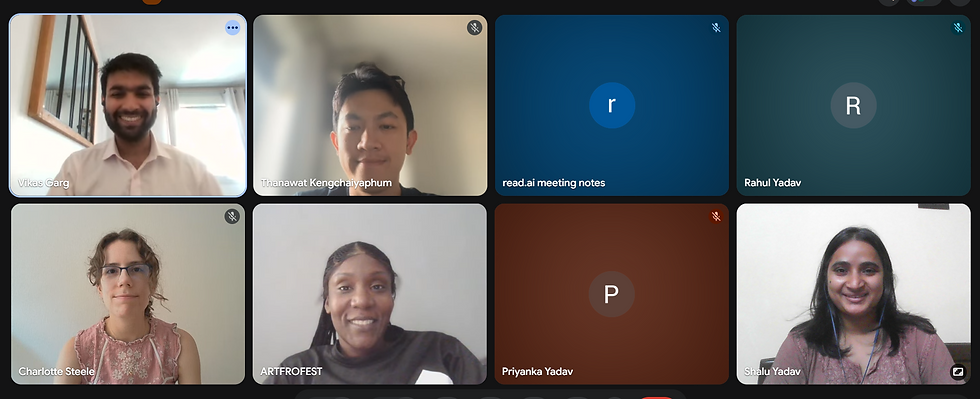
The loneliness behind remote work
Working from home offers flexibility, but it can also remove many of the small social interactions that happen naturally in an office. A quick conversation over coffee, an unexpected discussion with a colleague or even a few minutes of informal conversation before a meeting can help people feel connected.
Research suggests that remote work can make this harder. A 2026 study of more than 87,000 employed adults in the United States found that people working remotely three or more days a week had higher odds of experiencing loneliness than those who did not work remotely. Researchers suggest that reduced opportunities for in-person interaction may be one factor.
But adding more meetings may not be the answer.
You can spend an entire day speaking to colleagues and still feel disconnected when every conversation is about deadlines, projects and targets. What people often need is not simply more interaction, but opportunities for more meaningful interaction.
This is where art can help.
Why does art make conversation easier?
Imagine sitting with a group and looking at the same painting.
One person notices the colours. Another focuses on a particular figure. Someone else sees sadness where another person sees calm.
There is no single correct answer.
That changes the conversation. People can disagree without having to prove someone wrong. They can change their interpretation as they listen to others. And because the discussion is about an artwork rather than someone's personal life or work performance, sharing an opinion can feel less exposing.
Research on Being Present with Art, a Yale-associated programme combining mindful looking and group engagement with artworks, found reductions in stress alongside improvements in attention and feelings of belonging. Participants also reported lower stress one month after completing the four-week programme.
The important point is that participants were not simply looking at paintings. They were slowing down, reflecting and engaging with others.
Art can create space for empathy
Art can also help people approach difficult subjects indirectly.
Instead of asking someone, "Have you ever felt lonely?", a group might discuss why a figure in a painting appears isolated. The conversation can gradually move towards experiences, emotions and different perspectives without anyone being required to disclose something personal.
Research with healthcare professionals found that discussing artworks depicting loneliness and suffering helped participants develop greater empathy and a deeper understanding of loneliness.
A 2025 study involving medical students and doctors who participated in art-based observational training at Amsterdam's Rijksmuseum also reported improvements in empathy and tolerance of ambiguity.
These findings should not be overstated. Art does not automatically make people more empathetic, and a single discussion cannot solve loneliness. The way the activity is facilitated matters.
The real value may be the shared experience
This is perhaps the most important point.
The evidence around arts participation and loneliness is promising, but it does not suggest that simply putting artwork in front of people will make them feel connected. The social experience around the artwork is what matters.
People look at something together. They listen to different interpretations. They discover that a colleague noticed something they missed. They may disagree, laugh or share a memory.
For a remote team, that creates a rare kind of interaction: one without a deadline or productivity target.
A simple 20-minute session could begin with one question:
What do you notice?
From there, the conversation can unfold naturally.
Perhaps the value of art in the workplace is not that it gives people an escape from work. It gives them a reason to encounter each other differently.
And sometimes, meaningful connection can begin with something as simple as looking at a painting together.
References
He, T. et al. (2026). Remote work and loneliness: Evidence from a nationally representative sample of employed U.S. adults. Journal of Affective Disorders. PubMed
Filipowska, R., Weinberg-Wolf, H., & Vaghenas, A. (2024). Being Present with Art: Mindful and Interactive Engagement with Art Lowers Stress While Increasing Attention and Belonging. Journal of Museum Education. Research paper
Images of loneliness: using art as an educational method in professional training. PubMed. Research reference
Bult, S. A., & van Gulik, T. (2025). Empathy and tolerance of ambiguity in medical students and doctors participating in art-based observational training at the Rijksmuseum in Amsterdam. PubMed
Karim, H. et al. (2025). Relationships between arts participation, social cohesion, and well-being: An integrative review of evidence. Frontiers in Public Health. Research paper

