
What Makes a Collector Stop and Look Twice?

How does a collector discover an artist they have never heard of?
Sometimes it is a gallery. Sometimes it is an exhibition, an art fair or a recommendation from someone they trust. And increasingly, it might be a post they happened to come across online.
But discovery is only the beginning.
A collector might see one artwork and scroll past. They might see it again a few weeks later and become curious. They might visit the artist's website, read about their practice, follow them for a while and eventually enquire about a work.
So what makes that shift happen?
At Artlune, we don't think there is a formula for becoming “collectable.” But there are certain things that make an artist easier to understand, remember and connect with.
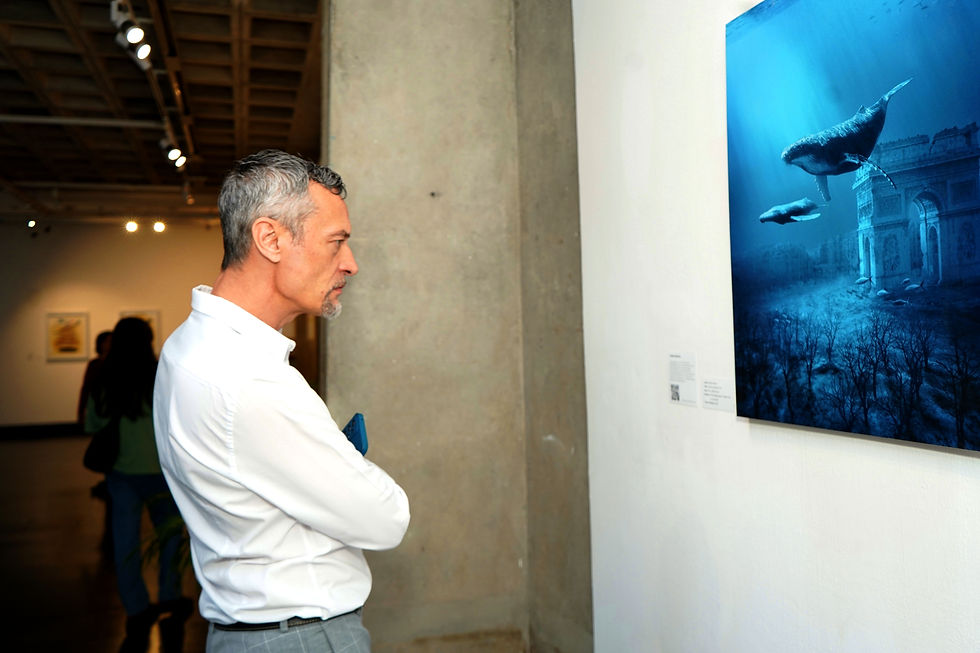
It Starts With the Work
This sounds obvious, but it is worth saying.
Before the website, the Instagram strategy or the artist statement, there has to be something in the work that makes someone want to look again.
Collectors may be drawn to colour, material, technique, subject or simply a feeling they cannot immediately explain. Research from Artsy has found that the visual appeal of a work is often the starting point for collectors exploring the artist and their wider career.
That does not mean your work needs to be instantly accessible.
Some of the most interesting practices take time to understand. What matters is having something that feels genuinely yours.
A Collector Wants to Understand Your Practice
Imagine a collector discovers one of your paintings online.
They like it.
Then they ask: What else does this artist make?
Can they find an answer?
This is where having a coherent body of work becomes important.
You do not need every artwork to look identical. In fact, experimentation is an essential part of an artist's development. But there should be some sense of connection; an idea, question, material, process or way of looking that runs through the practice.
A collector should be able to move from one work to another and begin to understand how you think.
That is much more interesting than simply having a recognisable aesthetic.
Your Story Should Open a Door, Not Sell the Work
Collectors are often interested in the person and thinking behind an artwork, but that does not mean every artwork needs a dramatic story attached to it.
Your story can be simple.
What led you to this subject? Why do you return to a particular material? What experiences have shaped the questions you are exploring?
The goal is not to convince someone that your work is important.
It is to give them a way into it.
A thoughtful artist statement, studio note or conversation can help a collector understand what they are looking at without telling them exactly what they are supposed to feel.
Leave some room for discovery.
Don't Underestimate Being Findable
Here is a small test.
Imagine someone hears your name today and searches for you tonight. What happens?
They should be able to find recent work, a clear introduction to your practice, exhibition information and a straightforward way to get in touch.
This matters because today's collectors are increasingly discovering artists online. Artsy's research has found that newer collectors are particularly comfortable using digital platforms to discover and research artists, with many online discoveries eventually leading to in-person purchases.
Your digital presence does not need to be perfect. It needs to be alive.
An outdated portfolio can make a developing practice look inactive. A carefully maintained one can show that you are continuing to work, exhibit and evolve.
Think of your website as a studio door. When someone arrives, make it easy for them to come in.
Make the Buying Process Less Complicated
You might have made the most compelling artwork in the room, but if a collector cannot figure out how to enquire about it, the journey can stop there.
Price, size, medium, availability and other relevant details should be reasonably easy to find.
This is not about turning art into an online shopping catalogue. It is about removing unnecessary uncertainty.
Artsy's recent market research found that lack of transparency remains one of the biggest barriers for collectors, with pricing and information about artworks being particularly important.
If someone has to send three emails simply to find out whether a work is available, you may lose a genuinely interested collector.
Clarity is not less artistic. It is good professional practice.
Recognition Helps, But It Isn't Everything
Exhibitions, residencies, awards, publications and gallery representation can certainly help build confidence around an artist.
But don't fall into the trap of collecting credentials simply because you think collectors expect them.
A long CV cannot compensate for a practice that feels unresolved.
Recognition becomes meaningful when it shows movement: that your work is being seen, discussed, exhibited and developed.
For emerging artists, this can be especially important. Current Artsy research shows that collectors continue to show strong interest in emerging artists, with 72% of surveyed collectors saying they were drawn to emerging art in its 2025 market research.
You do not have to look established before you are allowed to be collected. You just need to show that you are taking your practice seriously.
Relationships Matter More Than Reach
There is a difference between having 10,000 followers and having ten people who genuinely follow your work.
Collectors may encounter your work online, but relationships are often built through conversations, exhibitions, studio visits, events and repeated encounters.
That is why we would encourage artists to participate in the art ecosystem rather than only promoting themselves within it.
Visit exhibitions. Speak to curators. Meet other artists. Attend talks. Share what you are learning. Stay connected.
You never know where a meaningful introduction will lead. And don't approach every interaction as a potential sale. Sometimes the relationship comes first.
Give People a Reason to Come Back
Perhaps this is the biggest shift we would encourage artists to make.
Don't think only about how to get someone to buy one artwork. Think about how to make them want to follow your practice.
A new series. An exhibition. A studio update. A residency. A collaboration. A new question you are exploring.
Collectors are not only interested in finished objects. Many want to understand how an artist is developing over time.
That ongoing relationship can be more valuable than a single moment of attention.
So, What Are Collectors Really Looking For?
There is no universal collector. Some buy instinctively. Some research for months. Some care deeply about an artist's story. Others respond first to the work itself. Some are interested in emerging practices, while others prefer established names.
But across these different approaches, one thing remains important: trust.
Trust that the work is genuinely yours.
Trust that you are serious about your practice.
Trust that the information you provide is clear.
And trust that there is something worth continuing to discover.
At Artlune, we believe the goal for an emerging artist should not be to make yourself look more established than you are.
It should be to make your practice more visible, more understandable and more memorable.
Because getting a collector to notice you is one thing.
Giving them a reason to keep looking is where the real relationship begins.
References
.ART — What Art Collectors Look for in Emerging Artists (and How to Get Noticed)
Artsy — Art Market Trends 2025
Artsy — The Art That Collectors Care about Today
Artsy — Art Collector Insights 2024
Artsy — 6 Key Factors Driving Art Collectors—from Aesthetics to Investment
Artwork Archive — How to Craft Your Artist About Page to Win Over Collectors
Artsy — 10 Young Art Collectors on Their Advice for New Buyers


