
How Inclusive Art Exhibitions Create Meaningful Community Engagement and Measurable Social Impact

At Artlune, we often speak about art as something that goes beyond aesthetics. Art can transform spaces, start conversations, challenge assumptions, and most importantly, bring people together.
This is why building inclusive communities through art exhibitions has become one of the most important conversations in the cultural sector today.
Across museums, galleries, cultural institutions, public spaces, and community-led initiatives, there is growing recognition that art exhibitions are not simply places where artworks are displayed. They are platforms where people gather, share perspectives, exchange experiences, and build connections.
The most impactful exhibitions are no longer measured solely by attendance numbers or sales figures. Increasingly, cultural organisations are asking deeper questions:
Who feels represented?
Who feels welcome?
Who is participating?
What conversations are being created?
What long-term community impact remains after the exhibition closes?
These questions sit at the heart of community engagement through exhibitions.
At Artlune, we believe that building inclusive communities through art exhibitions is not a trend. It is a responsibility. And when approached thoughtfully, art exhibitions can become powerful tools for social connection, cultural participation, and meaningful change.
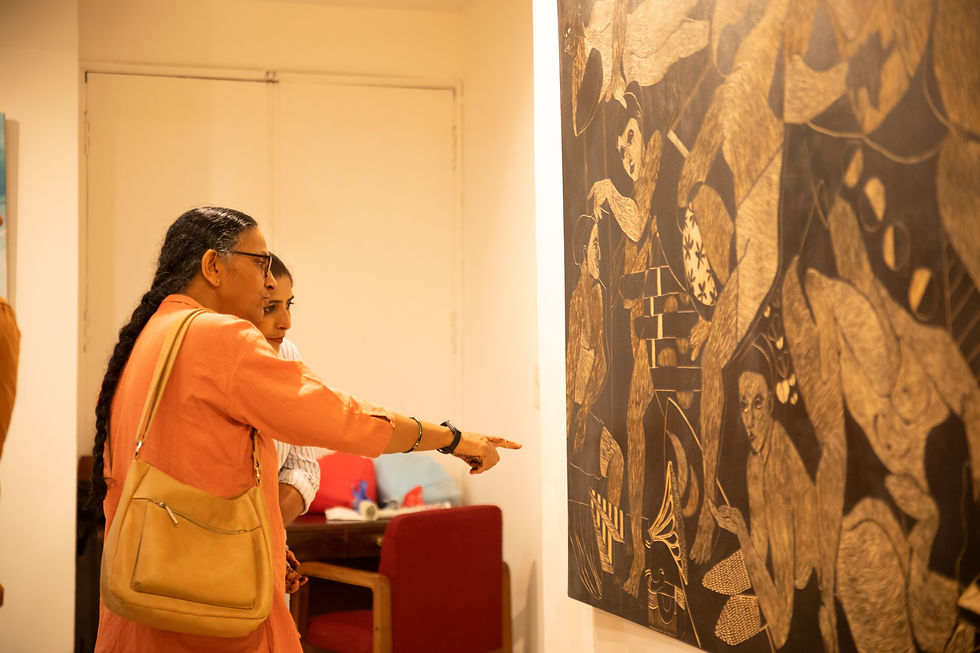
Why Building Inclusive Communities Through Art Exhibitions Matters
For decades, many cultural institutions operated within relatively traditional frameworks. Audiences were often seen as observers rather than active participants.
Today, expectations have shifted.
Communities want to see themselves reflected within cultural spaces. Audiences increasingly seek experiences that feel relevant, accessible, and participatory.
Research from the Arts Council England, UNESCO, and numerous cultural engagement studies consistently demonstrates that participation in arts and cultural activities contributes to stronger social cohesion, greater civic engagement, and increased feelings of belonging.
This is where building inclusive communities through art exhibitions becomes particularly important.
Inclusive art exhibitions create opportunities for people from different backgrounds, generations, cultures, abilities, and experiences to encounter one another through shared creative experiences.
Rather than speaking to a single audience, these exhibitions create space for multiple voices.
And that shift fundamentally changes how communities interact with art.
Community Engagement Through Exhibitions Is More Than Audience Development
Many organisations still view community engagement through exhibitions primarily as a marketing objective.
But meaningful community engagement goes much deeper.
True community engagement through exhibitions involves creating opportunities for participation before, during, and after an exhibition.
This can include:
Community consultations during exhibition development
Artist talks and public discussions
Interactive workshops
Educational programmes
Collaborative projects with local organisations
Community storytelling initiatives
Youth engagement activities
Accessibility-focused programming
When communities become contributors rather than passive visitors, the exhibition experience becomes significantly richer.
At Artlune, we have repeatedly observed that audiences develop stronger emotional connections when they feel included in the cultural process rather than simply invited to view the outcome.
This creates a sense of ownership, trust, and belonging that extends beyond the exhibition itself.
Representation Is Central to Inclusive Art Exhibitions
One of the most important aspects of building inclusive communities through art exhibitions is representation.
Representation is not simply about diversity quotas or visibility. It is about ensuring that different experiences, perspectives, identities, and narratives are genuinely included within cultural conversations.
Historically, many communities have found themselves underrepresented within mainstream cultural institutions.
Inclusive art exhibitions actively work to address these gaps.
This may involve:
Supporting emerging artists from underrepresented backgrounds
Highlighting overlooked histories
Creating platforms for marginalised voices
Encouraging cross-cultural dialogue
Challenging dominant narratives
The result is often a richer and more nuanced exhibition experience for everyone involved. Audiences gain access to new perspectives. Communities feel seen.
Artists find opportunities to share stories that might otherwise remain unheard.
This is one of the most powerful outcomes of community-building through art.
Art Exhibitions as Spaces for Dialogue
One of the unique strengths of art exhibitions is their ability to facilitate conversations that may be difficult to have elsewhere.
Art often provides an entry point into complex social, cultural, and emotional topics.
Visitors may approach an artwork from different perspectives, but the shared experience of engaging with the work creates opportunities for dialogue.
Inclusive art exhibitions frequently become spaces where conversations around identity, migration, memory, environment, mental health, belonging, and social change can unfold naturally.
These conversations strengthen community engagement through exhibitions because they encourage empathy and understanding.
Art does not necessarily provide answers. But it creates spaces where meaningful questions can be explored together.
Measuring the Social Impact of Art Exhibitions
For cultural organisations and institutions, one challenge often arises:
How do we measure the social impact of art exhibitions?
Attendance numbers remain useful. However, they only tell part of the story. The social impact of art exhibitions often extends beyond visitor counts and ticket sales.
Today, many organisations are adopting broader impact frameworks that examine:
Participation
Who attended?
Were new audiences reached?
Did the exhibition attract diverse communities?
Engagement
How actively did visitors participate?
Were meaningful conversations generated?
Did visitors spend time engaging deeply with the content?
Inclusion
Did visitors feel represented?
Did they feel welcomed and valued?
Were accessibility barriers addressed?
Community Partnerships
Were local organisations involved?
Did the exhibition strengthen community relationships?
Long-Term Outcomes
Did the exhibition inspire ongoing projects, collaborations, learning opportunities, or community initiatives?
At Artlune, we encourage organisations to think about impact both quantitatively and qualitatively.
Stories, testimonials, interviews, community feedback, and participant reflections often reveal outcomes that statistics alone cannot capture. Sometimes the most meaningful impact comes from a single conversation, connection, or moment of recognition.
Why Cultural Organisations Must Think Beyond Attendance
Many institutions still focus heavily on attendance figures when evaluating success.
While attendance matters, it does not automatically equal impact.
An exhibition can attract thousands of visitors yet create very little meaningful engagement.
Conversely, a smaller exhibition may generate deep community participation and lasting social value.
Building inclusive communities through art exhibitions requires moving beyond volume and focusing on depth.
Success should include questions such as:
Did people feel connected?
Did communities feel represented?
Were barriers reduced?
Were new relationships formed?
Did participants leave with a stronger sense of belonging?
These are increasingly the indicators that define meaningful cultural impact.
The Future of Community-Building Through Art
As cultural institutions continue evolving, community-building through art will become even more important.
Audiences increasingly seek authenticity, participation, and relevance. Communities want cultural spaces that reflect their experiences and invite their voices. Artists want opportunities to engage with audiences in deeper ways.
Institutions are recognising that long-term sustainability depends on meaningful community relationships. Building inclusive communities through art exhibitions is, therefore, not simply a programming strategy.
It is a framework for creating stronger cultural ecosystems.
It strengthens social connections.
It increases accessibility.
It supports representation.
It encourages dialogue.
And it helps ensure that art remains relevant within contemporary society.
Artlune's Perspective
At Artlune, we see exhibitions as more than cultural events. We see them as opportunities to create connections.
Every exhibition has the potential to become a meeting point between artists, communities, institutions, and ideas.
When community engagement through exhibitions is approached thoughtfully, and when inclusive art exhibitions are designed with genuine participation in mind, the impact extends far beyond gallery walls.
The future of culture belongs to organisations that understand this. Because ultimately, the most successful exhibitions are not only remembered for the artworks they displayed.
They are remembered for the communities they helped build.
Partner With Artlune
Whether you are a museum, cultural institution, CSR initiative, educational organisation, public space, or community-led project, Artlune helps design and deliver meaningful exhibitions that prioritise community engagement through exhibitions, inclusion, participation, and measurable social impact.
If you are looking to build inclusive communities through art exhibitions while creating genuine cultural value for your audiences, connect with Artlune to explore collaborative exhibition programmes, public engagement initiatives, artist-led interventions, and socially impactful cultural experiences.


