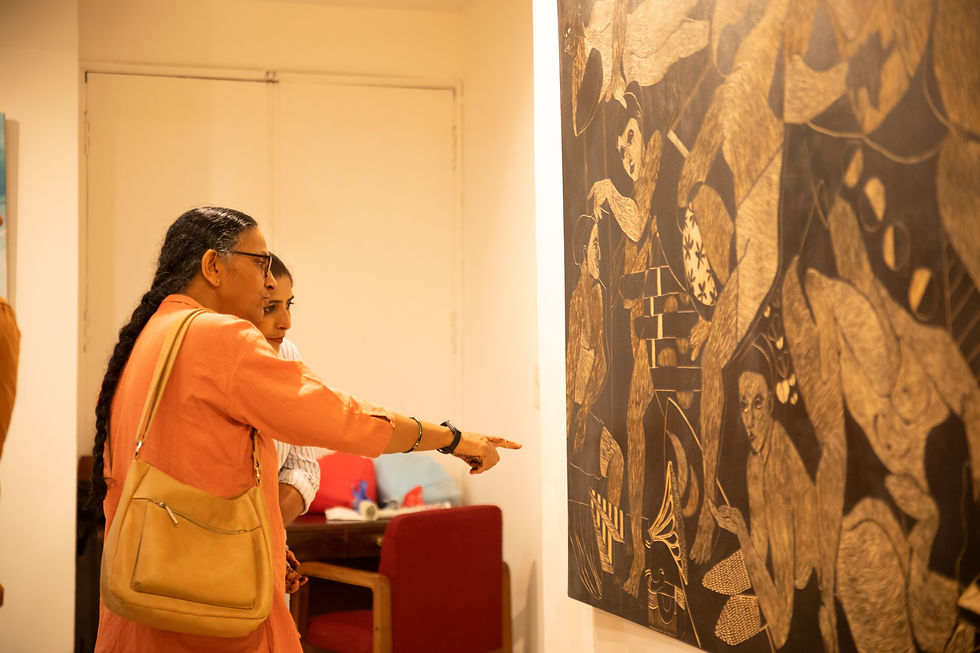
Why Art Is Becoming a Strategic Tool for CSR and Social Impact, Not Just Philanthropy

As the UK's social impact economy grows, businesses are discovering that investing in art creates measurable community impact alongside cultural value.
For a long time, corporate support for art was viewed as an act of generosity. Companies sponsored exhibitions, donated to museums, or funded cultural events because it reflected goodwill and strengthened their public image. Art was appreciated as something worth supporting, but it was rarely considered a strategic investment capable of creating measurable social outcomes.
That perception is changing.
Today, businesses are being asked a different question. Instead of asking, "How much did you donate?" stakeholders increasingly want to know, "What changed because of your investment?"
This shift is transforming the way organisations approach Corporate Social Responsibility (CSR). Across the UK, social impact is becoming central to investment decisions, with measurable outcomes carrying as much weight as financial performance. According to Better Society Capital, the UK's social impact investment market reached approximately £11.2 billion in 2024, making it one of Europe's most developed impact investment ecosystems. Market forecasts also suggest continued growth as investors increasingly prioritise organisations capable of generating both financial returns and measurable social value.
For the arts, this represents an important turning point.
Art is no longer simply something organisations choose to support. Increasingly, it is becoming a strategic tool for building stronger communities, improving well-being, preserving cultural heritage, and creating lasting social impact.

CSR Is Evolving from Giving to Creating Impact
The expectations placed on businesses have changed dramatically over the past decade.
Investors, employees, customers, governments, and local communities now expect organisations to demonstrate how they contribute to society beyond financial performance. CSR is no longer measured by the size of a donation alone. Instead, it is measured by outcomes and the difference an organisation creates through its investments.
Businesses are now asking questions that were once reserved for charities and social enterprises.
Can a project improve community wellbeing?
Can it strengthen cultural participation?
Can it create opportunities for underrepresented voices?
Can it build stronger relationships between organisations and the communities they serve?
These questions now sit at the heart of modern CSR strategies.
Recent sustainable investment reports also show that capital is increasingly flowing towards initiatives that demonstrate resilience, measurable outcomes, and long-term societal value rather than short-term visibility. Investors are becoming more pragmatic, favouring projects that create lasting change while remaining financially sustainable.
Art naturally fits within this evolving framework.
Art Creates Social Impact That Extends Beyond the Gallery
When people hear the phrase art investment, they often picture paintings hanging in boardrooms or collections displayed inside museums.
In reality, the impact of art begins long before an artwork reaches a wall.
Supporting an artist means investing in years of creative labour, preserving cultural knowledge, sustaining traditional practices, and creating opportunities for communities to participate in meaningful conversations.
A single exhibition has the power to bring together educators, students, local residents, collectors, businesses, policymakers, and cultural organisations under one roof. An artist residency can introduce creative education into underserved communities, while public exhibitions can spark conversations around identity, migration, mental health, heritage, and belonging in ways that reports or presentations often cannot.
Unlike many CSR initiatives that conclude once funding ends, cultural projects continue creating value through education, public engagement, new partnerships, and ongoing community dialogue. Their impact grows over time as more people engage with the stories they tell.
This is precisely why art is increasingly being recognised as social infrastructure rather than simply cultural programming.
Businesses Are Investing in Relationships, Not Just Projects
One of the strongest themes emerging from the UK's impact investment landscape is the growing importance of community trust.
Communities today expect organisations to become active participants in local life rather than simply fund isolated initiatives from a distance. Businesses are increasingly recognising that lasting impact comes from building relationships, not just delivering projects.
Art creates those opportunities naturally.
Unlike traditional corporate campaigns, exhibitions invite participation rather than promotion. They encourage people to gather, reflect, discuss ideas, and contribute their own perspectives. These shared experiences create genuine human connections that advertising alone can rarely achieve.
For businesses, this translates into something far more valuable than visibility. It builds trust.
Supporting artists demonstrates a long-term commitment to the communities in which organisations operate. It shows that a business is investing in people, stories, and culture rather than simply attaching its name to an event. When approached thoughtfully, cultural partnerships become meaningful relationships instead of transactional sponsorships.

Art Gives Visibility to Stories That Often Go Unheard
At its core, social impact is about people.
It is about creating spaces where different experiences, histories, and perspectives can be seen, heard, and understood.
Emerging artists often document realities that receive little public attention. Through their work, they explore themes such as migration, memory, environmental change, identity, disability, gender, tradition, and community resilience. These stories help audiences engage with complex social issues through empathy rather than statistics alone.
Supporting these artists does far more than advance individual careers. It strengthens cultural representation, expands public dialogue, and ensures that communities see themselves reflected within contemporary culture.
For organisations committed to Diversity, Equity, Inclusion, and Belonging (DEIB), investing in artistic voices provides an authentic way to support representation through action rather than messaging alone.
Measuring Impact Through Art Is Becoming Easier
One of the reasons cultural investment was historically overlooked within CSR was the belief that artistic outcomes were difficult to measure.
That assumption no longer holds true.
Today, organisations evaluate cultural programmes using a broad range of measurable indicators that align closely with ESG and impact reporting frameworks. These include community participation, audience engagement, educational workshops delivered, emerging artists supported, employment generated within the creative economy, cultural accessibility initiatives, public wellbeing outcomes, long-term community partnerships, and the representation of underrepresented voices.
Together, these indicators create a compelling business case for investing in culture.
Art is no longer viewed as an intangible benefit whose value cannot be demonstrated. Increasingly, it is recognised as an evidence-based contributor to measurable social value.
Why This Matters for South Asian Contemporary Art
At Artlune, we see this every day.
The emerging South Asian artists we work with are doing much more than creating visually compelling artworks. They are preserving traditions that risk disappearing, documenting changing identities, and exploring themes such as memory, migration, repair, belonging, and cultural continuity.
These are conversations that matter not only within the art world but across society.
When organisations support these artists, they help preserve cultural heritage while creating opportunities for communities to engage with stories that might otherwise remain invisible.
The impact extends well beyond the exhibition itself.
Every artist who is supported strengthens an ecosystem that includes curators, educators, researchers, craftspeople, institutions, and audiences. Every exhibition creates space for dialogue. Every partnership becomes an investment in long-term cultural sustainability.
The Future of CSR Includes Culture
The future of CSR is unlikely to be defined by isolated donations or one-off sponsorships.
Instead, it will be shaped by partnerships that generate measurable, lasting value for both businesses and communities.
Art is uniquely positioned to contribute to that future because its impact extends across multiple dimensions. It improves well-being, strengthens community relationships, preserves cultural heritage, creates space for difficult conversations, and supports emerging creative economies.
Above all, art reminds us that meaningful social impact is built through human connection.
As impact investing continues to grow across the UK, organisations have an opportunity to rethink what cultural investment can achieve. Art is no longer simply something businesses support because it is the right thing to do. It is becoming something they invest in because it creates measurable, long-term social value.
Partner with Artlune to Create Lasting Social Impact
At Artlune, we work with businesses, CSR teams, foundations, and cultural organisations to design meaningful art initiatives that create measurable community impact.
From supporting emerging South Asian artists and curating public exhibitions to developing employee engagement programmes and long-term cultural partnerships, we help organisations turn their CSR commitments into lasting cultural value.
If your organisation is looking to build stronger communities while supporting the next generation of South Asian artists, we'd love to start that conversation.